
<<Questions ONLY index

Think you are a Civil War expert?

The Smithsonian Associates Civil War Newsletter has a Trivia question issue and we award PRIZES to one trivia contest participant each issue!

To subscribe to the newsletter, send an e-mail to CustomerService@
residentassociates.org and typeSUBSCRIBE Civil War Studies in the body of the message.


Civil War Trivia Answers


40. Who was the biggest fool on April Fool's Day of 1865?

General George Pickett.  

As if having a failed battle charge named for him wasn't enough, Pickett suffered further humiliation in the closing days of the war.  On April 1, 1865 his troops were attacked at Five Forks while he was two miles away enjoying a shad bake with Generals Fitzhugh Lee and Thomas Rosser.  Atmospheric conditions muffled the sounds of battle so they remained unaware of it until they returned.  By that time it was too late, and the final defeat of Confederate forces was all but complete.  Pickett spent the rest of his life selling insurance; and after his death, his child-bride LaSalle spent the rest of her life writing books and articles to clear his name.

39. Who defined an honest politician as someone who, "once bought, stays bought"?

Simon Cameron, famous as a political machine boss, political opportunist, and Abraham Lincoln's first Secretary of War.  Cameron served less than a year, resigning after stories of his unscrupulous dealings in contracting for war materiel came to light.  He's also known as one who "never forgot a friend or forgave an enemy."  His actions in procuring inferior army uniforms and blankets that would shred and fall apart gave rise to the word "shoddy" for any poorly manufactured product.  

38. What was known as a "shinplaster?"

"Shinplaster" is a term dating back to the American Revolution, and perhaps beyond. History has it that a soldiers' pay was of so little value that they used it to put in their boots to protect their shins. Because of its devaluation as a result of wartime inflation and the prevalence of counterfeiting, the term later was used to describe Confederate money.

37. Name another member of the Lincoln family who served as president.

Robert Todd Lincoln served in government, was a successful private attorney, and in 1901 became president of the Pullman Luxury Coach Company, makers of the famous locomotive sleeping car.

36. Name the two songs known best to General Ulysses S. Grant.

Grant was once asked which of the many war songs he liked best. He mentioned that he was a poor person to ask such a question because, "I know only two tunes. One of them is Yankee Doodle. The other isn't."

35. Who said, "No pack of whining, snarling, ill-fed, vagabond street dogs ... ever more strongly produced the impression of forlorn, outcast, helpless, hopeless misery."

This quote by Frederick Law Olmsted describes the retreating Union Army after the First Battle of Bull Run.

34. Who was known as the dictator of Congress?

Pennsylvania Senator Thaddeus Stevens.

As related by Hans L. Trefuosse in Thaddeus Stevens, 19th Century Egalitarian, "When in a minority, he was a terror to an arbitrary majority, and when in a majority, he 'laid a heavy hand' on a minority. No wonder the man his enemies in Gettysburg called 'dictator' was later to be considered, the dictator of Congress."

33. Who called baseball "America's game"?

Poet Walt Whitman.

It was Whitman's friend and biographer Horace Traubel who tells how Whitman responded when Traubel told him that baseball has become "the hurrah game of the republic."

Whitman replied, "That's beautiful: the hurrah game! Well, it's our game: that's the chief fact in connection with it. America's game: has the snap, go, fling, of the American atmosphere, belongs as much to our institutions, fits into them as significantly as our constitutions, laws: is just as important in the sum total of our historic life."

Whitman also said baseball would relieve nervousness and dyspepsia. Is that a poetic or a medical license?

32. Who was known as the "Calico Colonel"?

Civil War Nurse Mother Bickerdyke.

31. Why did Stagger Lee shoot Billy--AND--what's that got to do with Civil War history?

Stagger Lee shot Billy because Billy took his Stetson hat.

What's that got to do with Civil War history? Almost as soon as the murder occurred, the story turned into a song that developed into a legend romanticizing the events of that fateful night in St. Louis. More than just the murder, the song also touched on the divisive politics in St. Louis and the interracial strife of the post-Reconstruction South.

For slaves and slave descendants, using song to tell a story was common. Since slaves generally did not read, they passed on their folk stories and cultural experiences by turning important events into song. Traced back to Africa and the Caribbean, this tradition appears as the work songs of the fields, continuing to the Blues (some consider the first "blues" song to be the story of "Stagger Lee"); to Jazz, Soul; and, today's Rap music. Each shares the theme of the underdog pitted against the system, sometimes winning and sometimes not, but always going down fighting.

W.E.B Du Bois described the tradition this way: "They are the music of an unhappy people, of the children of disappointment, they tell of death and suffering and unvoiced longing toward a truer world, of misty wanderings and hidden ways. ... Through all the sorrow of the Sorrow Songs there breathes a hope--a faith in the ultimate justice of things. ...These are the African American historical record."

30.What is an FFV?

First Families of Virginia.

Members of these families are descended from the original English aristocrats who settled Virginia in the 1650s. They established the pattern of the elite slave-planter society later emulated throughout the South. To be included, your family tree requires (legitimate) branches into the 100 plus families of prominence such as the Lees, Randolphs, Masons, Chesnutts, Carters, Custises, Berkeleys, Beckworths, Byrds, and other names reflected in county, school, and street names found throughout the Old Dominion.

29.What was Abraham Lincoln’s first official act as President?

Mr. Lincoln's first official act was to appoint John Nicolay as his secretary. Nicolay, at a salary of $2500, served throughout the Lincoln Administration, and along with co-worker John Hay, wrote an extensive Lincoln biography, the only one approved by Robert Todd Lincoln. Source: David Herbert Donald's We Are Lincoln Men, page 180.

28.Who said, “Lee should have been hanged”? Extra credit if you can tell us why, where, and when it was said.

Henry Adams said, "I think that Lee should have been hanged. It was all the worse that he was a good man and a fine character and acted conscientiously. It's always the good men who do the most harm in the world."

27.What did Abraham Lincoln refer to as being both made up of “bean poles and corn stalks,” as well as “the most remarkable structure that human eyes ever rested upon.”

Potomac Creek Railroad Bridge. Throughout the Civil War, Union railroad engineer General Herman Haupt built--and rebuilt--many railroad bridges, enabling men and materiel to be transported wherever they were needed. Among his most impressive accomplishments was the Potomac Creek Railroad Bridge. Taking only two weeks, using almost two million feet of lumber, he built a four hundred-foot long, eighty-foot high bridge, using his own patented lattice-style diagonal braced trusses. On seeing it, Mr. Lincoln said, “…there is nothing in it but beanpoles and cornstalks.” During the war, this bridge remained a vital link to supply the Union army.

26.In 1862, why was Abraham Lincoln’s October salary less than it was in September?

In order to pay for the war, Congress passed legislation imposing a tax on income, to take effect the following September. When Mr. Lincoln received his September paycheck the next month, his net salary was $2022.33, $61 (3%) less than his previous paycheck.

25.What was a “hire badge”?

Slave hire badges were worn by slaves who were hired out by their owners. Badge laws were first passed in order to identify slaves, tax the practice, and to limit this type of labor from competing with white tradesmen in urban areas. The tags are about 3” in diameter, made of thin copper and etched with a number, city, occupation, and year. Of the many thousands that were issued, only about 100 still exist, and therefore are extremely valuable. They evoke the heartbreak of slavery in America, from which a profit is still made. Today slave badges are valued at over $30,000.

24.President Lincoln ordered work on the capitol dome to continue throughout the Civil War as a symbol of the Union…NOT! We learned this is just another Civil War urban legend. What was the real reason work continued?

The hazards of government contracts!

Engineer-in-charge of the Capitol dome, Montgomery Meigs, was the first to use the Capitol as a symbol of unity. In 1856, to convince Congress to appropriate more money to his project, Meigs told them that it would be, “a sight well worth its cost to see the Congress, in the midst of all this agitation, going on quietly and voting a million for completing the Capitol of this Federal Union and thus showing the little regard they had for the foolish fears of those who talked about its end.”

In May 1861, the same Montgomery Meigs ordered a halt to construction on the Capitol because the government could not guarantee payment. But the workmen continued. Why? There were 1.3 million pounds of iron lying on the Capitol grounds waiting to be cast. If the contractor walked away from the job, it was sure to be stolen before it had a chance to rust. “The sound of the hammer never stopped on the national Capitol a single moment during all our civil troubles,” so wrote the Architect of the Capitol, and Meigs’ archenemy, Thomas U. Walter. Source: History of the United States Capitol, by William C. Allen, page 314.

23. A prize to the reader who visits the new Smithsonian Associates CivilWarStudies.org web page and can identify the most photographs in our new logo!

The correct answers, left to right top:
Abraham Lincoln caricature in Harper’s; Dunker Church at Antietam; Rose Greenhow & daughter at the Old Capitol Prison; Horace Greeley, newspaper editor; drummer boy Johnny Clem; George Custer; John Wilkes Booth; Stonewall Jackson; Sojourner Truth; Elmer Ellsworth, young friend of Lincoln’s killed removing a Confederate flag from an Alexandria hotel; Dr. Mary Walker, first woman recipient of the Congressional Medal of Honor; General Confederate General Mahone; Admiral Farragut; Frederick Douglass; Dorthea Dix; Caspar Burberl terra cotta frieze on the Pension Building. The building was designed by Montgomery Meigs.
Left to right, bottom row:
Civil War sheet music; Joshua Lawrence Chamberlain; Clara Barton; Jefferson Davis; Ulysses S. Grant; Parrott gun at Union battery; George & Ellen McClellan; deck of the Monitor; Confederate General John B. Gordon; Mary Lincoln; Libby Prison at Richmond; Confederates at Gettysburg; vivandiere; construction of the Capitol dome.

Back to list of questions

22. Name the individual who was once a slave to the attorney who prosecuted the Dred Scott case in St. Louis, and later worked in the Lincoln White House.

The answer is: Elizabeth Keckley.

Elizabeth Keckley was born a slave in North Carolina. She was given to her master’s daughter on her marriage to attorney Hugh Garland of St. Louis. Although Garland tried the Dred Scott case in the Supreme Court of Missouri, he was a not prosperous attorney. Elizabeth was able to earn enough from dressmaking to buy her own and her son’s freedom. She settled in Washington DC where she worked for the antebellum “rich and famous” including Mrs. Jefferson Davis, and eventually Mary Todd Lincoln. During those years, she became Mrs. Lincoln’s friend and confidante.

21. Who is buried in the largest mausoleum in North America?

The answer is: no one.

At least that’s the most correct answer, after being informed by our devoted readers. “One is entombed in a mausoleum, not buried.” But what we were really getting at is who’s in there, anyway?

The answer is Ulysses S. and Julia Dent Grant. While Grant was a failure as a president and later as a businessman, no one could deny his success in bringing the Civil War to an end. Nor could they deny the superb writing skills that allowed him to finish his memoirs (published with very little re-editing) the day before his death, thereby rescuing his wife and family from certain poverty. At the time, Grant was as popular as George Washington and Abraham Lincoln in the hearts of most Americans.

So, who’s buried in Grant’s tomb? That is, entombed—in Grant’s tomb? It used to be nobody. A huge fundraising effort collected the money required to build the monument at 122nd Street in New York City, but it wasn’t finished for another 12 years. Grant was entombed on the 75th anniversary of his birth, April 27, 1897 as over a million spectators watched Mrs. Grant and President William McKinley lay the General in his final resting-place. Mrs. Grant lived until 1902 and was entombed next to her husband. The site was among the most popular of New York’s tourist attractions until decades of neglect and disrepair took their toll. It wasn’t until the Grant descendants threatened to move their ancestors elsewhere that the National Park Service devoted funds to restore the site. A re-dedication was held one hundred years after the original, on April 27, 1997

Back to list of questions

20. Who was known as the "Cleopatra of the Confederacy"?

The answer is none other than Belle Boyd.

Known as La Belle Rebelle, her spying career began when she reportedly shot and killed a Union soldier who insulted her. Belle was acquitted and soon became a local celebrity in her hometown of Winchester, attracting the attention of Generals Beauregard and Jackson, for whom she acted as courier and spy. She was captured and imprisoned three times, once at the old Carroll Prison in Washington DC in a cell not far from another famous Confederate female spy, Mrs. Rose Greenhow. In 1864 she escaped to England on a mission for the Confederates, and soon after married the Union naval officer who helped her. She divorced him and remarried several times and had several children. When penniless, she hit the road in a stage show where she dressed in a Confederate uniform and recounted her Civil War adventures.

Back to list of questions

19. What is a "doggery"?

A "place of dissipation or idle resort, " a saloon.

When running against Stephen A. Douglas, Abraham Lincoln used the word in an 1858 letter to a campaign associate. Lincoln learns that the opposition is sending outsiders into the district to pad the vote for Douglas. Lincoln became suspicious when he observed a group as they "dropped in about the doggeries" of the town. In the letter, Lincoln presents a plan to counter with a tactic of his own. He wrote, "It would be a great thing, when this trick is attempted upon us, to have the saddle come up on the other horse... If we can head off the fraudulent votes we shall carry the day." They did not carry the day, but the campaign against Douglas brought Abraham Lincoln national prominence, setting the stage for his presidential victory in 1860.

Back to list of questions

18. Name the ex-Union general who motivated Jesse & Frank James along with the Younger Brothers, to rob the First National Bank in Northfield, Minnesota in 1876.

Adalbert Ames.

In Jesse James, Last Rebel of the Civil War, author T. J. Stiles explains how Ames as governor of Louisiana had unsuccessfully attempted social reform, with much negative press in both the North and South. After that bitter experience, Ames set out for Minnesota to work with his father and brother in their banking business. For Jesse James, Ames became a bitter reminder of the Lost Cause and a symbol of Union occupation in the South. His plan was to target Ames' family's bank to make a "political" statement against the eastern establishment; and, to steal the money.

What James thought would be the end of Ames was instead the beginning of the end for Jesse himself. In switching from robbing trains--where the "victim" was a corporation--to robbing banks, which held the hard-earned savings of working-class folk, the James Gang lost the romantic esteem they once held in the public imagination. Those in the gang who were not killed in the Northfield raid went their separate ways. Jesse spent the rest of his few remaining years living in hiding and eventually was murdered in his own home at age 34.

Back to list of questions


17. Confederate dynamite couldn't blow it up and it still stands today. What now threatens to destroy the Monocacy Aqueduct?

Mother Nature.

Of course dynamite couldn't blow it up, because dynamite wasn't invented until 1866! But while the Confederates did try twice to destroy the aqueduct, the greatest threat to the structure is 170 years of alternating heat, cold, and water.

Back to list of questions


16. How many times was Confederate General Nathan Bedford Forrest wounded during the Civil War?

Forrest was physically wounded in battle just three times. At Shiloh, he was shot through the left hip and the bullet lodged in his spinal column; he was wounded again just prior to the Battle of Chickamauga; and, he was shot in the right foot at the Battle of Tupelo. However, his Civil War medical history is more colorful if we add the contusions he suffered each of the six times he was "unhorsed" in battle, with only one instance in which the horse was shot out from under him. The most unusual shooting occurred when one of his officers tried to kill him. Including all these instances, the total number of times Forrest was wounded during the Civil War is ten.

The answer comes from Medical Histories of Confederate Generals, by Jack D. Welsh, M.D., Kent University Press, 1995, Kent, Ohio. Both this book and its companion, Medical Histories of Union Generals, make for fascinating, albeit grotesque, reading. When finished, you will be grateful you live in the age of antibiotics.

Back to list of questions


15. For what was Civil War Colonel Charles Ellet most famous?

Many Civil War fans are familiar with Charles Ellet's designs for ramming vessels, which were responsible for winning control of the Mississippi for the North. Few know that before the Civil War, Charles Ellet was a civil engineer who was most famous for building the first suspension bridges in America.

Back to list of questions


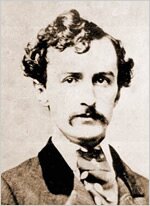
14. Among the possessions found with John Wilkes Booth when he was captured were photographs of five women. Who were they?

The photos included four actresses of the day, Alice Grey, Helen Western, Effie Germon, and Fanny Brown. The fifth was Lucy Hale, daughter of John P. Hale, former senator from New Hampshire and a prominent Republican abolitionist. Lucy and Booth were secretly engaged a month before the assassination. Some say it was she who invited Booth to attend Lincoln's second inauguration, after which Booth reportedly told his co-conspirators, "What an excellent chance I had to kill him then."

Back to list of questions


13. Where is Traveler?

Traveller, Robert E. Lee's beloved horse, is buried outside the chapel of Washington & Lee University in Lexington, Virginia. Originally named "Jeff Davis," he was a Tennessee Walking Horse purchased by Lee in 1861. Traveler and Lee were together throughout the war, both retiring to Lexington afterward.

After Lee's death, Traveler became a local celebrity. Even today visitors to Traveler's grave remember him by leaving sugar cubes on his tombstone. (Visit Fort Ward's web site to learn about other Civil War mascots, even Robert E. Lee's little known pet hen!)

Back to list of questions


12. What is a sockdolager?

One who strikes a heavy or decisive blow. Our winner tells us the word is similar in nature to other Americanisms such as "hornswoggle" and "skedaddle." Sockdolager combines the word "sock" meaning a blow and "doxology" a hymn of praise sung at the end of a church service. The Civil War connection comes in because it was spoken in the play, Our American Cousin, performed the night of April 14, 1865.

It was just following the line, "I guess I know enough to turn you inside out, you sockdologising old man-trap!" that John Wilkes Booth fired at President Lincoln. Some say Booth timed his action with the audience's laughter, believing it would muffle the sound of the shot and the ensuing confusion. Knowing what the word means, could it be that Booth fired at that moment because he believed he was striking a decisive blow for the South?

Back to list of questions

11. Who is the only Confederate general with a statue in the District of Columbia?

Albert Pike

While there are several in Statuary Hall in the U.S. Capitol, the only outdoor statue in the District of Columbia of a Confederate general was erected to honor Albert Pike. (Thanks to our subscribers who recognized our error in not specifying "outdoor statue.")

Back to list of questions


10. Who said, "The office of the President of the United States is not fit for a gentleman!"?

President James Buchanan

This rather obscure but very telling quote was found in Margaret Leech's classic Civil War study, Reveille in Washington. In discussing Buchanan's final, and very sad days as president, she says:

"The old politician from Pennsylvania was timid, not treacherous. In ordinary times, he might have retired with honor at the close of his term. He had been caught in the glare of a crucial moment of history. Even his Southern friends, to whom he had conceded so much, had turned against him. At a dinner party at Mr. Corcoran's, General Scott witnessed the passionate outbursts of Senator Toombs and Senator Benjamin, who cursed the President, along with Major Anderson and the Union. In the end, his sundered country was united only in the opinion that Mr. Buchanan was a coward and a fool. Sinking heavily into a chair in Scott's headquarters, the President exclaimed, "The office of President of the United States is not fit for a gentleman to hold!"

Back to list of questions


9. Which Civil War general was nicknamed "Kill Cavalry"?

Union General Hugh Judson Kilpatrick.

Kilpatrick was born to a poor family, but finagled his way into West Point. This ambition and self-promotion drove him to become a ruthless cavalry commander, as well as profiteer, adulterer, and would-be assassin. The last was the result of an unsuccessful raid on Richmond in which his cohort, Ulrich Dahlgren, was found carrying papers indicating they had gone to Richmond to murder Jefferson Davis and his cabinet. In spite of his notoriety, General Sherman chose Kilpatrick as cavalry chief during his march to the sea. Sherman said, "I know Kilpatrick is one hell of a damned fool, but I want just that sort of man to command my cavalry."

Kilpatrick also had political ambitions, and hoped that his Civil War exploits would lead to public office. Instead, he was twiced-named Ambassador to Chile, where he continued a life of scandals and adulterous affairs. He died from kidney disease at aged forty-five. If they'd had penicillin, he might have become President!

Back to list of questions


8. He had an unusual and renown Civil War career, but for what is Holt Collier most famous?

The Teddy Bear. (Visit the original Teddy Bear at the Smithsonian.

Holt Collier was born a slave in Mississippi in 1846 (the year varies in several accounts). His experiences included being a Confederate cavalry scout (when he accompanied his master and joined the Confederate Army at age 12), involvement in wild-west gunfights, and hunting trips to Mexico and Alaska. But Collier was best known as a bear hunter.

When President Theodore Roosevelt went to Mississippi in 1902 to hunt bear, Collier was selected to guide the party. Collier assured the President that he would bag a bear, "if I have to tie one up and bring it to you." Well, he practically did. Collier found a bear, but the President was elsewhere during the hunt. Collier tied it to a tree, brought Roosevelt to it, and everyone waited for the shot to be fired.

Although considered a conservationist, Roosevelt had recently been criticized for his cruelty in killing big game animals for sport. Roosevelt declined to shoot the tied-up bear. Among the reporters in the hunting party was cartoonist Clifford Berryman who satirized the scene for the Washington Post. A toy maker saw the cartoon and hit upon the idea of turning the bear into a stuffed toy. The rest, as we at the Smithsonian say, is history, which you can find at: http://www.americaslibrary.gov/pages/aa_roosevelt_bears_1.html

Back to list of questions


7. Who said Sir Walter Scott was the cause of the Civil War?

Mark Twain.

Although a Southerner himself, Samuel Clemens reviled the chauvinist attitude held by many Southerners as originated and perpetuated by the popular novels of Sir Walter Scott. In Life on the Mississippi, Clemens says,

"Then comes Sir Walter Scott with his enchantments… It was Sir Walter that made every gentleman in the South a Major or a Colonel, or a General or a Judge, before the war; and it was he, also, that made these gentlemen value these bogus decorations. … Sir Walter had so large a hand in making Southern character, as it existed before the war, that he is in great measure responsible for the war."

Back to list of questions


6. Who did both Northern and Southern soldiers call the "graybacks"?

"Graybacks" was the common name for Pediculus humanus corporis and Pediculus vestimenti--body lice. Per Taber's Cyclopedic Medical Dictionary, they are "transmitted by direct contact or use of infested wearing apparel, occurs as a result of crowding or unhygienic conditions." John Billings' Hardtack and Coffee, describes "skirmishes" with this gray enemy and how every Civil War soldier battled with them, regardless of rank or pre-war social ranking.

Back to list of questions


5. How did Pea Patch Island get its name?

Pea Patch Island, located in the Delaware River, was named after a Colonial-era legend that a boat loaded with peas ran aground on a river shoal. The cargo of peas capsized and soon sprouted. Pea Patch Island is the location of Fort Delaware, used as a Confederate prisoner of war camp after the Battle of Gettysburg.

Back to list of questions


4. (In commemoration of the 140th anniversary of the August 2, 1861 passage of the first income tax legislation): How did the Form 1040 get its name?

It received its name just by chance. The number 1040 was the next number up in the system of sequential numbering of forms developed by the Bureau of Internal Revenue.

Back to list of questions


3. What is the origin of the word "deadline?"

The "deadline" was what the prisoners called the perimeter of Andersonville. Any prisoner crossing that line would risk being shot. Like many military phrases, American business has adapted the term to mean the time limit to complete a job-often at the risk of being shot if that limit is crossed!

Back to list of questions


2. What was the original name proposed for the State of West Virginia?

Kanawha. In August 1861, pro-Union western Virginians took steps to separate from the remainder of Virginia and create a new state known as Kanawha. Their constitutional convention met and in 1862 sent Congress a constitution for the new state, but with the proposed name changed from Kanawha to West Virginia. West Virginia was admitted to the Union as the 35th state on June 20, 1863.

Back to list of questions


1. What is the origin of the word Antietam?

A Delaware Indian word meaning "swift flowing water."


For online audio programs on History, Literature, Show Business and more...

Visit Voices from The Smithsonian Associates today!


Home - One Day Events - Current Newsletter - Newsletter Archives - Join Newsletter -
Online Thumbnail Tours
- Online Audio Programs - Civil War Trivia - Contact Us

Copyright © 1995-2004 by The Smithsonian Associates
Privacy Statement - Smithsonian Institution